
Web Audio Preview Resets After Switching? Check Stale ended Events
Give each playback an identity so an old source cannot reset the controls for a newer sound.

Preview B is audible, but the control has already switched back to Play. An ended event can follow a scheduled stop or ordinary playback completion. The application needs the identity of the source that stopped before updating shared controls.
Make the handoff visible in the log
Assign A and B different playback tokens. Log the switch request, the old source stop and both callbacks. Make B current before stopping A. A can release its own resources when its callback arrives, but it should update the controls only if its token is still current.
Test cancellation and queue progression
If natural completion advances a playlist, mark a user stop or replacement before stopping the source. Run natural completion, an explicit stop and a rapid A–B–A sequence. Confirm that each old callback leaves the current source reference and queue position intact.
See the official reference and related diagnostic guide. Use SFX Generator to review or prepare assets, then validate runtime behavior in your own project.
Turn the race into three repeatable checks
- Let A play to completion. Record its token, stop reason and queue index. Expect one UI transition and one queue advance if the product advances on completion.
- Stop A with the control. Mark that playback as cancelled before calling stop. Expect the control to become available and the queue index to stay put.
- Switch A → B → A rapidly. Assign a fresh token to each play, for example 41, 42 and 43. The two A plays share a file but have different identities. Delay the handler for 41 in your test harness. Expect token 43 to remain current when the delayed handler runs.
Keep node cleanup separate from shared state
Capture the node and token when you register its listener. The handler can disconnect its own node. Check the token before clearing the current reference, changing the control or advancing the queue. A trace like “ended, 41, replaced, current 43” should only clean up node 41. If switching requires async decoding, check the request identity again after decoding and before starting a new node. Otherwise an older load can start after the latest selection.
For each check, record the visible control state, the current node reference and the queue index. Confirm all three against the intended behavior so a correct-looking control does not hide a stale reference.
Recommended tools
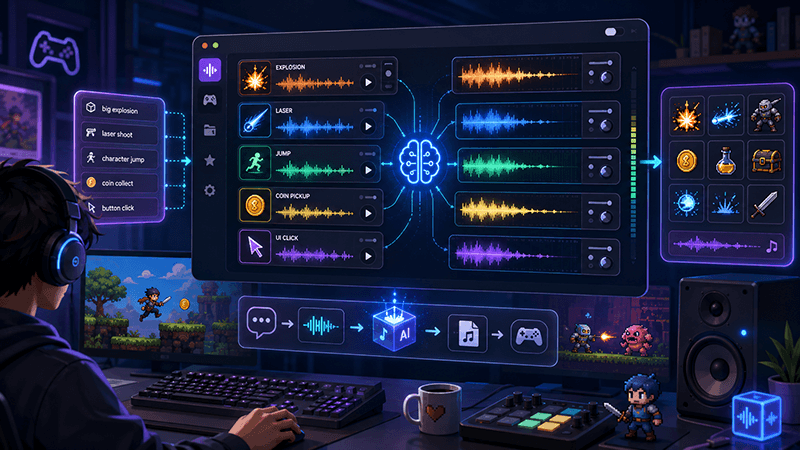
AI Game SFX Generator: A Practical Guide for Indie Game Developers
Learn how an AI game SFX generator helps indie developers create fast, usable sound effects for UI, coins, weapons, magic, horror, retro games, and rapid prototypes.
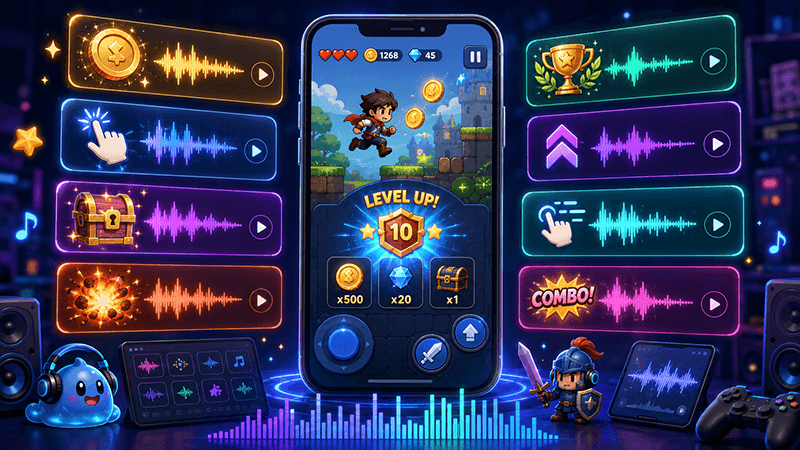
AI SFX Generator vs Sound Library: Which Is Better for Game Audio?
Compare AI SFX generators and traditional sound libraries for indie game audio. Learn when to generate custom effects, when to use libraries, and how to combine both workflows.
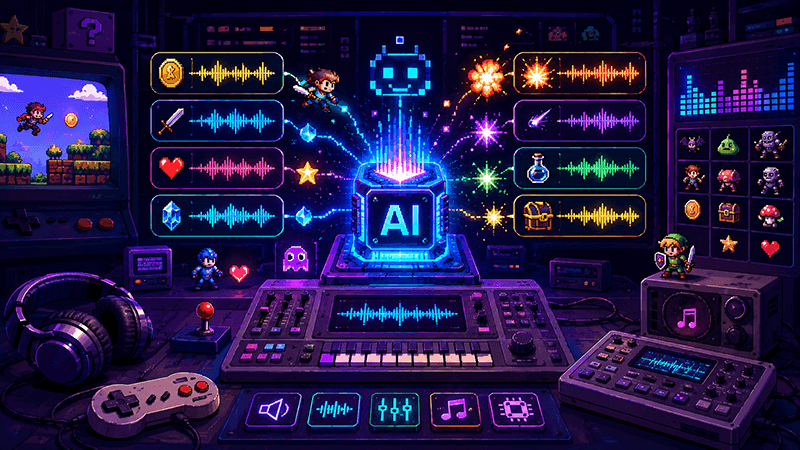
Best Sound Effects to Create First for an Indie Game Prototype
A practical checklist of the most important game sound effects indie developers should create first, including UI clicks, pickups, hits, rewards, errors, transitions, and completion cues.
Ready to try "Web Audio Preview Resets After Switching? Check Stale ended Events"?
Use our online tools to apply this tutorial to your indie game project right away.